

Have you noticed that sometimes your body relaxes naturally, and other times it stays tense even after rest?
This difference isn’t about discipline.
It’s about the mode your body is in.
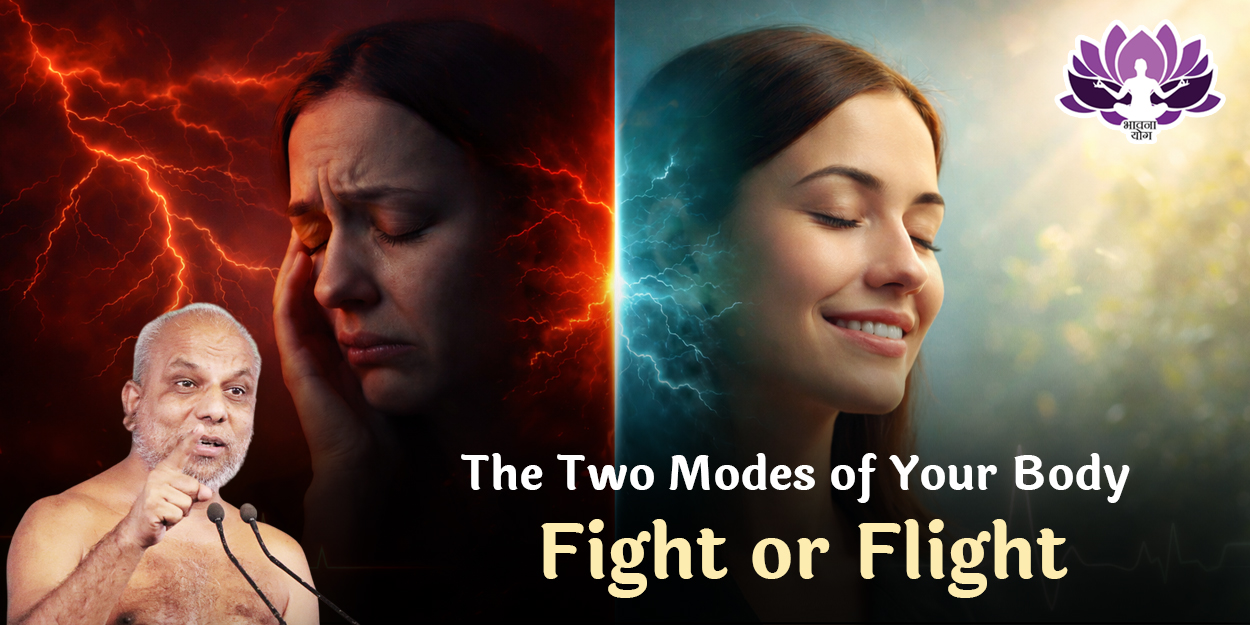
The body operates in two basic modes
At any given moment,
your body functions in one of two states:
-
Fight/Flight mode
-
Rest/Digest mode
This isn’t psychology jargon.
It’s basic physiology.
When does Fight/Flight mode activate?
Fight/Flight turns on
when the body senses danger.
That danger can be:
-
external
-
or internal (unprocessed emotion)
In this mode:
-
heart rate increases
-
breathing becomes shallow
-
muscles stay tense
The body prepares to survive.
The problem begins when this mode doesn’t switch off
Fight/Flight is useful in short bursts.
But when:
-
anger stays suppressed
-
fear goes unacknowledged
-
stress becomes constant
the body remains stuck in survival mode.
That’s when fatigue, restlessness,
and heaviness appear.
What does Rest/Digest mode do?
Rest/Digest is the body’s
safety and repair mode.
Here:
-
breathing deepens
-
healing happens
-
energy restores
This is real rest.
But this mode activates only
when the body feels safe.
Emotions decide which mode stays active
The body doesn’t read calendars.
It doesn’t follow logic.
It responds to what it feels inside.
If the inner state is:
-
anger
-
fear
-
constant pressure
the system stays in Fight/Flight.
This is where emotional signatures begin
Every emotion
settles into the body differently.
Each emotion leaves
a specific physical pattern.
And once you begin to notice these patterns,
the body starts making sense.
Next week, we begin a new series:
“4 Emotions, 4 Body Signatures”
We’ll start with the most misunderstood emotion of all:
Anger.
Anger is energy.
When it isn’t processed,
it turns toxic for the body.
If this blog brought clarity to your inner tension,
the next one will feel uncannily accurate.